
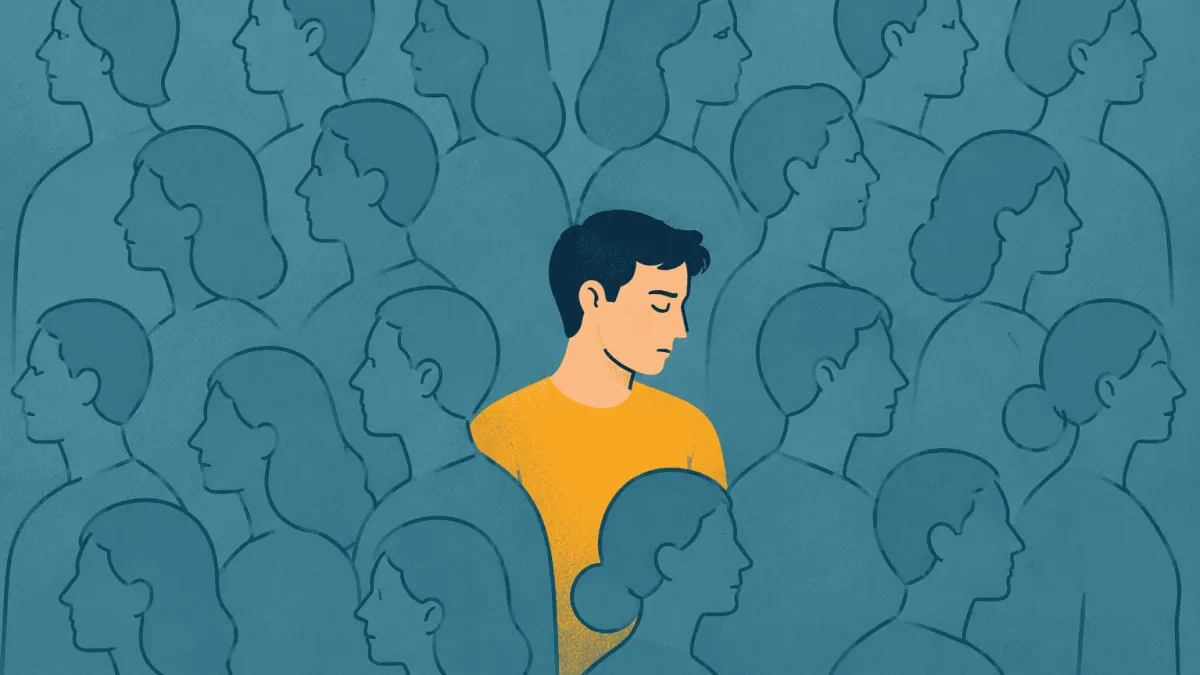
For nearly his entire life, a man has felt like an outsider. This feeling, he writes, has been a constant thread, driving him to prove his worth through sports, music, and teaching. He wanted to be the kind of person others were glad to know.
In his early twenties, while attending graduate school in Philadelphia, this longing for connection led to a strange and memorable event. A friend brought him to a party. Standing around a pool with a group of close friends, he tried to join the conversations but could not find a way in. After an hour, he stepped off the edge into the deep end of the pool, fully dressed. The cold water closed over him. His friend was embarrassed, and they drove home in silence.
The memory of that night stayed with him for thirty years. He felt shame about the act, as if needing to be seen and valued was a weakness. It took him decades to understand that the need itself was not the problem. He later read that for most of human history, belonging to a small group was a matter of survival. Research also shows that the brain processes the pain of exclusion through the same pathways as physical injury. The need to belong, he learned, is as basic as hunger and thirst.
Looking back, he now believes he chose a rejection he could control over one he could not. The cold water was honest. It did not pretend he belonged. The humiliation he felt that night, and for years afterward, became part of who he was meant to be. Because he knows what it feels like to be unseen, he can recognize that struggle in others.
Today, when he walks into a room, his attention moves toward the person standing alone. He knows that person. The feeling of not belonging has not disappeared, but it has become something he can carry without being crushed by it. He has learned to accept it and draw strength from it.
He also learned that he had to admit his yearning for belonging was not always blocked by his own walls. Sometimes, it simply was not being offered by others. He has found that people often give others what they most need themselves. The pain he experienced showed him what he was made for.
In his twenties, he brought a homemade Key Lime pie to a New Year’s Eve party. It was an unusual thing to do. One young woman laughed and joined him at the kitchen table for a slice. That woman became his wife. She later told him she never liked Key Lime pie, but she wanted to get to know the man brave enough to be himself in a room full of people pretending to be someone else. His calling to see people and help them belong, he says, is something he found by following his own need for the same thing.