

François de La Rochefoucauld once said, “We are so accustomed to disguise ourselves to others, that in the end we become disguised to ourselves.”
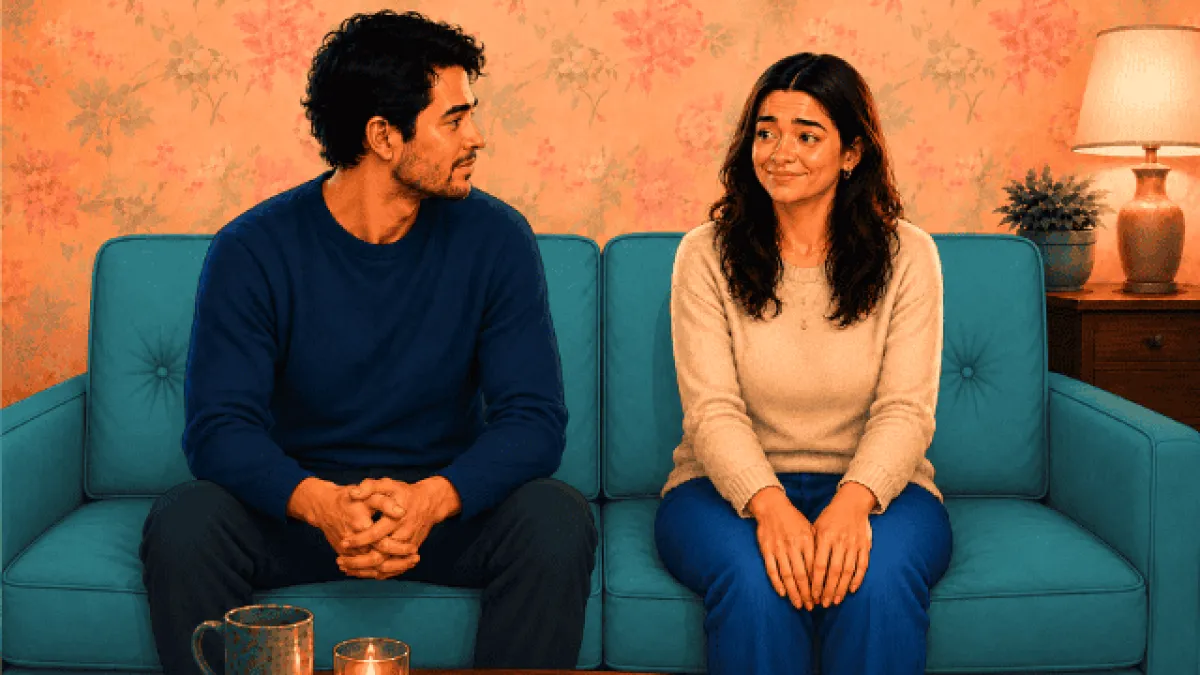
During a therapy session, a woman shared that her dinner plans with her partner had changed the night before. He had suggested going out, and she dressed up for a restaurant meal. When she arrived at his place, he was tired from work and decided he wanted to stay in and eat a defrosted meal instead. She told him, “I don’t mind—happy to do whatever you want,” and she meant it completely.
But later, while recounting the story to her therapist, she noticed herself defending her partner and her own position. As a therapist herself, she recognized that defending something often means something is wrong. She admitted that the last thing she wanted that night was a defrosted meal.
For most of her life, she considered herself easy-going, flexible, and accommodating. She thought her sensitivity to others was a gift. But underneath those qualities, she discovered patterns of self-abandonment so subtle they felt like part of her identity. This is why fawning can be hard to recognize. It does not feel like trauma. It feels like being thoughtful and emotionally intelligent.
People who fawn are often praised. They become the easy one, the loving one who keeps everything harmonious. External validation creates a loop that keeps them feeling loved. But over time, the body and relationships carry the cost of everything the personality has learned not to feel.
Fawning is ultimately about the fear of disconnection. In intimate relationships, where connection feels like safety, a rupture can feel like genuine terror. The fear is that if you are too much, not enough, or inconveniently yourself, your partner will leave and you will be alone. So you read their mood and adjust yourself accordingly.
From the outside, fawning looks like consent. But the body is always saying no. For a fawner, safety lives outside their own body, in the temperature of the other person. They become skilled at reading that temperature and shaping themselves to match it. The question “Who do I need to be to keep this safe?” hums beneath every interaction.
To bring all that attention to another person, a fawner must leave themselves. They override their own feelings, instincts, and needs. They do it so automatically that it no longer feels like a choice. It just feels like who they are.
Fawning is not something to demonize. It is a survival strategy. The nervous system finds a pathway to safety through connection when fighting, leaving, or shutting down does not feel possible. The problem is when the pattern becomes chronic and embedded, causing people to lose contact with who they are underneath it.
The cost of this disconnection often shows up in the body. A fawner cannot unconsciously fawn and stay connected to their own physiology at the same time. Resentment builds in the background, without a clear place to pin it, because the person was never allowed to feel it in the first place.
Relationships may feel close but somehow not real, because the person is performing inside them rather than living inside them. The persistent sense that people do not really know you, understand you, or appreciate you is common. The cost can also show up in health, as the body begins screaming with symptoms that can no longer be ignored.
Underneath all the accommodation, there is a part of a fawner that is always waiting. The hope is that if they do enough, give enough, and are good enough, someone will finally see them and reciprocate. That hope keeps the pattern alive.
When connection wavers or breaks, a fawner can feel suddenly adrift. The mind gets busy, reaching for anything to restore a sense of control. Sometimes it goes to fixing, sometimes to fantasies of a different life or partner, sometimes to fault-finding. But all of it is the same impulse: the nervous system reaching for safety.
What is actually needed in those moments is to feel the groundlessness itself. The unsteady ground is the passage to inner ground. Feeling the loss of connection, emptiness, and aloneness can be survived. It does not have to be immediately fixed or fled from. In that groundlessness, a person can discover they are still there and at home. Something inside holds strong, even when the external anchor is gone.
It is only from that place that anything real becomes possible, including what frightens most fawners more than disconnection itself.