
Elisabeth Kübler-Ross once wrote, “The reality is that you will grieve forever. You will not ‘get over’ the loss of a loved one; you will learn to live with it.”
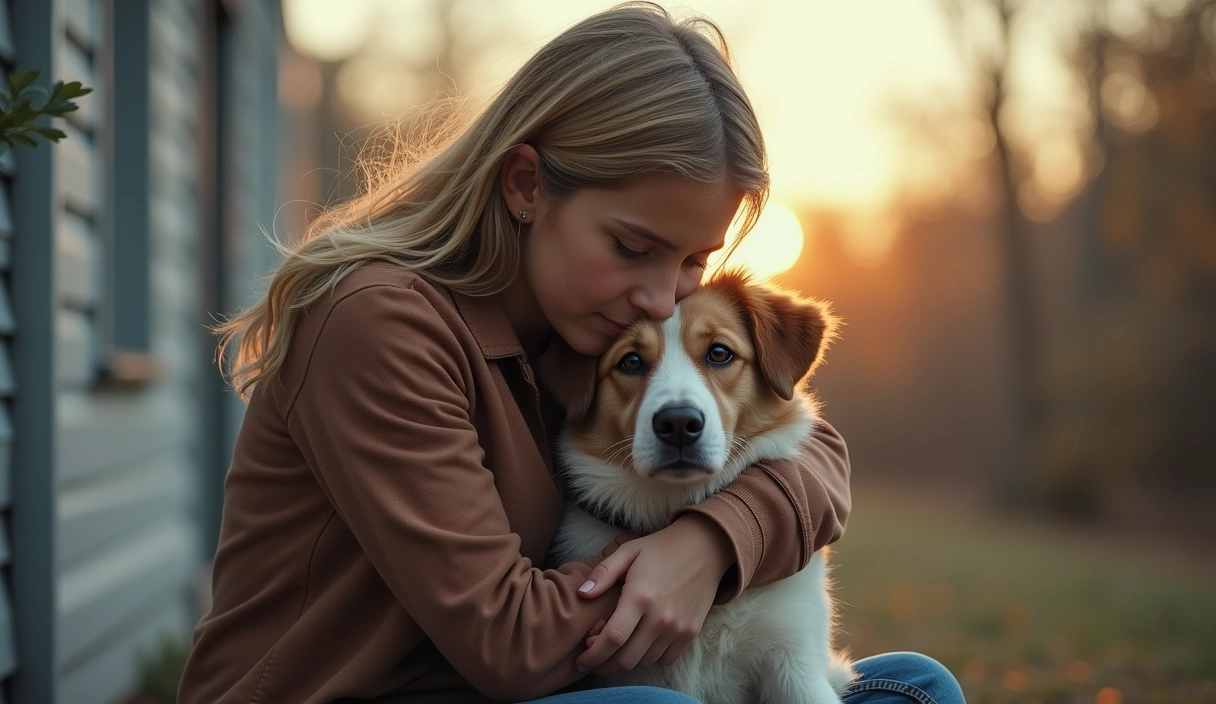
Diana, a friend, has a WhatsApp profile picture of herself hugging her dog, Zibby. Every time her name appears on the phone, the image is there. The two of them in a small square. The photo was seen so many times that it stopped being looked at closely. Until recently.
Zibby was not just a dog. She was part of the rhythm of their life. The mornings and evenings and all the ordinary hours in between. Those are the moments nobody thinks to hold onto until they are gone.
How Zibby Came to Be
Diana’s husband spent his career in oil and gas. The job took them far, first to China, then to Thailand. It was the kind of life where you are always figuring out a new city, a new grocery store, a new normal. They got Zibby while in China, though it almost did not happen the way it did.
Their daughter, Nicole, had her heart set on a golden doodle. She knew exactly what she wanted. Then they went to the shelter, and she saw a little beagle. That was the end of the golden doodle conversation. It was Zibby. Done.
Zibby was a handful. She was sneaky and spoiled and completely uninterested in being told what to do. She got into food she had no business touching. She destroyed toilet paper for sport. She walked into rooms she was not supposed to be in and stared as if the person was the one in the wrong place. Diana corrected her constantly. Zibby ignored her completely, every single time, without any apparent guilt.
The author got to know Zibby the way you get to know a neighbor’s dog, in bits and pieces over time. Diana and the author live in the same subdivision and would run into each other on walks. There was Zibby, nose down, pulling toward whatever smell had caught her attention, ears flopping, utterly absorbed in her own agenda. She had a way of making you smile without trying.
The author’s daughter and the author looked after her a couple of times when Diana and her husband made day trips to a neighboring city to visit Nicole at college. They would go over, fill her bowl, take her out back, keep her company for a while. A small favor. The kind you do not think twice about. The author did not know then how much she would find herself thinking about those afternoons later.
When Diana’s family moved back to the States for good, Zibby came with them and took to it immediately, like she had always known this was where they would end up. She got older. A little slower. Still stubborn as ever. Still finding you when she wanted something, right in the middle of whatever you were doing.
You do not think you will miss the small stuff. The nails on the floor. The way she would plant herself next to you. The particular chaos of her just being around. Then the house goes quiet and you understand that was the whole thing.
When Loss Piles Up
Diana lost her father about a year before Zibby died. Two completely different losses. Grief does not file things neatly. It accumulates. One loss sits next to another and suddenly you are carrying more than you realized, more than you would ever let on to anyone.
Zibby was the constant through that year. The walks had to happen. The feeding, the vet visits, the daily business of looking after a dog who needed you. That kind of routine is underrated when you are grieving. It gets you up. It gets you out. It keeps the day from collapsing into itself. Then Zibby was gone, and all of that went with her.
They walked together one morning not long after. The subdivision was quiet, the air still cool, that particular stillness before everyone else’s day starts. They talked for a while and then they did not. She stopped walking. Her eyes filled.
“People we love pass away,” she said. “We feel sad. But what can we do? Life goes on. That’s the nature of life.”
She was not brushing it off. She was not pretending to be fine. She said it the way you say something you have turned over so many times it has gone smooth. Like a stone you have been carrying long enough that it no longer has any sharp edges. The author did not say much. There was not anything to add.
What I Already Knew
The author lost her own father a few years ago. She is not someone who falls apart visibly or talks about hard things easily. But she thinks about him every day. Genuinely, every day. Sometimes it is a memory. Sometimes it is just a feeling. A lot of times it is a phrase she hears herself say and then recognizes as his, something absorbed over fifty-something years without realizing it was happening.
That is the thing about grief that catches you off guard. It does not really end. It just gets quieter. It stops being the only thing in the room and starts being something you carry around in your pocket. You forget it is there sometimes. Then something small happens, a song, a smell, a dog on a morning walk, and there it is again.
By the time you are in your fifties you have learned that loss does not come once. It accumulates. A parent. A friend. A pet. Some version of your life you did not get to say a proper goodbye to. You stop waiting to feel ready because ready does not show up. You just go on, and at some point you notice you have been managing it all along without anyone giving you credit for it. Most people have no idea what the person walking next to them is quietly holding.
The Way Things Come Back
Life settled after Zibby, gradually and without any announcement. Nicole finished school and came home, found a job nearby. The house that had gone so quiet had people in it again. Diana’s husband had retired. The two of them fell back into the small rhythms of everyday life, cooking, tidying, the unremarkable stuff that turns out to be the substance of things. None of it was about the dog. And somehow it was all connected.
Grief does not go away. What it does is shift. It starts feeling less like an absence and more like a presence. You are out on your morning walk and someone’s dog comes bounding past and for just a second there is Zibby, nose going, completely in her own world. It still catches you. But it also means something. Love does not disappear when someone does. It just changes address.
When Diana talks about Zibby now she goes back to all of it, China, Thailand, years of building a life in places far from home, this small beagle at the center of all of it no matter which country they were in. Missing her is not proof of something lost. It is proof of something real. Something that mattered enough to leave a mark.
What I Know Now
If you are in it right now, grieving a person or an animal or a chapter of your life that closed without warning, here is what the author has learned by going through it. Do not try to get to the other side faster than you can. Grief does not respond to pressure. It shows up when it wants to, in a photo on your phone, in a habit you did not know you had borrowed, on an ordinary Tuesday with no particular reason. You cannot outrun it. You may as well let it come.
Say the names. Tell the stories. This is not wallowing. It is just what love does when it does not have anywhere obvious to go anymore. Keeping the stories alive keeps the people alive, at least in the ways that still matter. Pay attention to the small details, not the headline memories. The specific ridiculous things. The way Zibby treated rules as purely theoretical. The exact way my father laughed at something he found genuinely funny. Those small details are what make an absence feel inhabited. They remind you it was a real life, not just a loss.
Let routine hold you together. When you do not feel like doing anything, the small ordinary things, a walk, a meal, the regular shape of a regular day, will carry you further than you would expect. Not because they fix anything. Because they keep you functional while you find your footing again. And trust that life does come back. Different than it was, yes. But not smaller. There is room for the grief and room for good things too. That turns out to be true even when it does not feel remotely possible.