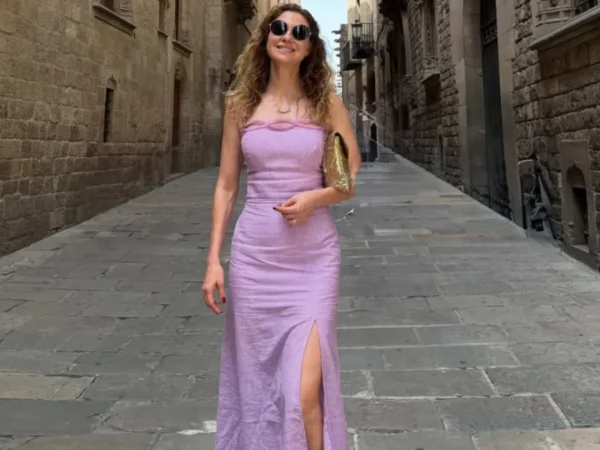


The author begins with a quote from leadership expert Simon Sinek: “We don’t build trust by offering help. We build trust by asking for it.” For as long as she can remember, she has been the strong sister, partner, and friend.
This role was not a conscious decision but something that developed early in life as the firstborn daughter. She became accustomed to carrying a larger load than her siblings. This strength and responsibility were rewarded by her parents and became a way to keep people close to her.
She describes herself as the friend people call when they are distressed, the friend who celebrates wins, the therapy friend, and the inspiration friend. She is the person who will sit for hours, pouring everything into a conversation, only to need days of quiet to recover afterwards. Still, she will send a follow-up text to check in.
She explains she had never deeply considered what she wants from her friendships or her own role within them.
The Question Nobody Was Asking
Inspired by Simon Sinek’s “Friends Exercise,” she contacted her four closest friends. The exercise involves asking a simple question: “Why are you my friend?” Sinek suggests the initial answers will be surface-level, but the deeper insight comes when a friend stops describing traits and starts describing how they feel when they are around you.
The feedback she received was positive, including descriptions like great friend, good listener, heart of gold, inspiring, and authentic. While proud, she immediately felt a pang of something else.
She questioned why none of her friendships felt deeply emotional. She reflected on her own vulnerability with friends, her comfort in asking for help, and whether her friends felt comfortable asking her for help. She then considered how her friends show up for her, which led to an uncomfortable realization.
The Pattern Hiding Behind the Strength
She realized that, outside of anger and frustration, she does not bring her emotions into her friendships. When difficult topics arise, she and her friends quickly shift into problem-solving mode, offering reassurance before a sentence is finished.
Her friendships mirrored past romantic relationships where emotional unavailability was present. She had, without realizing it, built a social circle that matched this dynamic. After reading a book on friendship, she understood she was delaying platonic intimacy rather than building it. She performed a role—always showing up with answers and support—but this did not create true closeness.
Her friendships began to orbit around what she could provide. She was not showing her frustrated, angry, or sad sides to friends she had known for years. She was consistently performing.
Where It Actually Came From
Growing up, she did not have friendships in the typical way, with sleepovers or constant companionship. She spent much of her youth alone and learned to be self-sufficient in connection, believing she must be valuable without requiring maintenance.
Emotional bonding never felt natural; it seemed like a foreign language understood but never spoken. By adulthood, she became someone people leaned on—a person who gave freely but received carefully. She told herself not everyone needs to be emotionally open to have good friendships.
She also made a conscious choice to avoid having a single, all-encompassing best friend, fearing the weight of such a bond. She did not see how this decision shaped her inability to ask for help or show vulnerability, only presenting a version of herself that was already “cleaned up.”
What the Audit Revealed
Reflecting on what creates closeness, she identified three elements: support, symmetry, and trust. Support means being there during messy times. Symmetry is the sense of a two-way relationship, not one person always giving. Trust is the safe space for private conversations.
She had mastered support and secrecy. Symmetry was what she had avoided. True symmetry requires also needing things, being the person who calls at 2 a.m. instead of only answering, and bringing an unpolished life into the friendship.
Feedback from her two local and two long-distance friends was consistent: she was inspiring, motivating, and safe. What was missing was any moment where she showed up needing something. That absence was its own data point.
The Thing About Asking
Simon Sinek’s statement, “We don’t build trust by offering help. We build trust by asking for it,” stopped her cold. She had believed the opposite—that being the strong friend who never needed anything made her trustworthy and worth keeping.
Sinek’s point was deeper. By never asking for help, she denied loved ones the honor of showing up for her, unintentionally making relationships one-directional. Such relationships, however loving, eventually create distance. Asking for help is not weakness or a burden but an intimate act of trust.
What Changed for Me
She started small, changing her questions from “How are you?” to “How are you feeling emotionally?” It felt specific, intentional, and awkward at first, as their friendships had always existed on the bright side.
She persisted and began to admit when she was not okay, when she felt low or was struggling. This was not performance or oversharing but leading by example. Her willingness to be vulnerable made it safer for her friends to be vulnerable too.
The shift happened slowly. Recently, a friend of over twenty years quietly told her during an ordinary conversation that she is too hard on herself. The author acknowledged it, saying she needed to show herself more grace. The moment was not dramatic, but she reflected on it for days. It meant her friend was paying attention and finally saying the hard thing instead of smoothing it over. It meant they were finally choosing each other over an easier, smoother version of their friendship.
The author concludes by addressing the reader directly. If you are the strong friend, the therapy friend, the one everyone leans on, she suggests trying Simon Sinek’s exercise. Call the people who matter most and ask them why they are your friend.
This process of self-reflection and opening up is not unique to the author. Many people, especially those in caretaker or supportive roles, can struggle with reciprocal vulnerability. Relationship experts often note that healthy, lasting connections require a balance of giving and receiving. Allowing others to support you can deepen bonds in unexpected ways, transforming even long-standing relationships.